Direct Painting
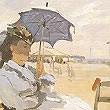 Direct
oil painting is a style popular since the late 19th
century in which the paint is applied opaquely to
completely cover the ground. Painting commonly proceeds
by stages, allowing drying between stages, but may
be completed in the one session given the right
skill and circumstances. White is used throughout,
plus thin washes in the lower stages, but glazing
is absent. The aim is a coherent and integrated
statement, with all aspects closely worked in.
Direct
oil painting is a style popular since the late 19th
century in which the paint is applied opaquely to
completely cover the ground. Painting commonly proceeds
by stages, allowing drying between stages, but may
be completed in the one session given the right
skill and circumstances. White is used throughout,
plus thin washes in the lower stages, but glazing
is absent. The aim is a coherent and integrated
statement, with all aspects closely worked in.
Commercial manufacturers of paint tend to put too much oil into the tubes, and then give their paint solidity by adding fats. You can use the commercial article straight from the tube if you wish, but you'll generally get better results by removing these oils and then remixing the pigments with media of your choice. Remove the oils by blotting with cardboard or blotting paper, or by placing tube oil on a glass plate, and then keeping the plate under water for 24 hours.
Steps:
1. Sketch in charcoal. Brush away surplus and trace sketch in turps-thinned paint.
2. Block in broad areas of color with turps-thinned but opaque washes of color Rework these wet into wet with white or more color as necessary. Dry if necessary.
3. Paint with more subtlety and detail in a fatter medium. Work of the previous stage may or may not show through.
4. Add details in fine soft brush.
Direct Painting of Portraits
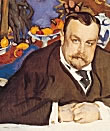 Solomon
{1} recommended this approach for portraits:
Solomon
{1} recommended this approach for portraits:
1. Draw accurately in charcoal; then pencil in with raw umber and turps.
2. Use oils to lay in background in correct tone and color, scraping back afterwards. Lay in main mass of hair at same time or at end of this.
3. Lay in main masses of flesh highlights and shadows.
4. Model hair simply.
5. Adjust three flesh tones as required.
6. Complete flesh modeling deftly and economically, painting wet into wet.
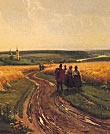 Richmond
{2} recommended this approach for landscapes:
Richmond
{2} recommended this approach for landscapes: